Have you ever thought of making money online? When you research the top 5 ways of making money online, somewhere in the mix, you will find affiliate marketing. Affiliate marketing can work for anyone willing to put in the time.
Using the passion you already have to gain a passive income is what draws so many to affiliate marketing. It’s something I’ve explored over the years, tweaking my strategy each time a new trend or platform popped up.
So if you’ve ever scrolled past those “How I Make Money While Sleeping” posts and wondered what’s really happening behind the scenes, well, the affiliate marketing avenue is worth checking out.
You may be asking yourself, “What is the affiliate marketing process?” and how will it help me achieve financial independence? Here, I’ll break down exactly how this system works, how you can get started, and some tips to help you avoid common roadblocks. After reading, you’ll be ready to jump into your own affiliate adventure.
Understanding Affiliate Marketing: The Basics
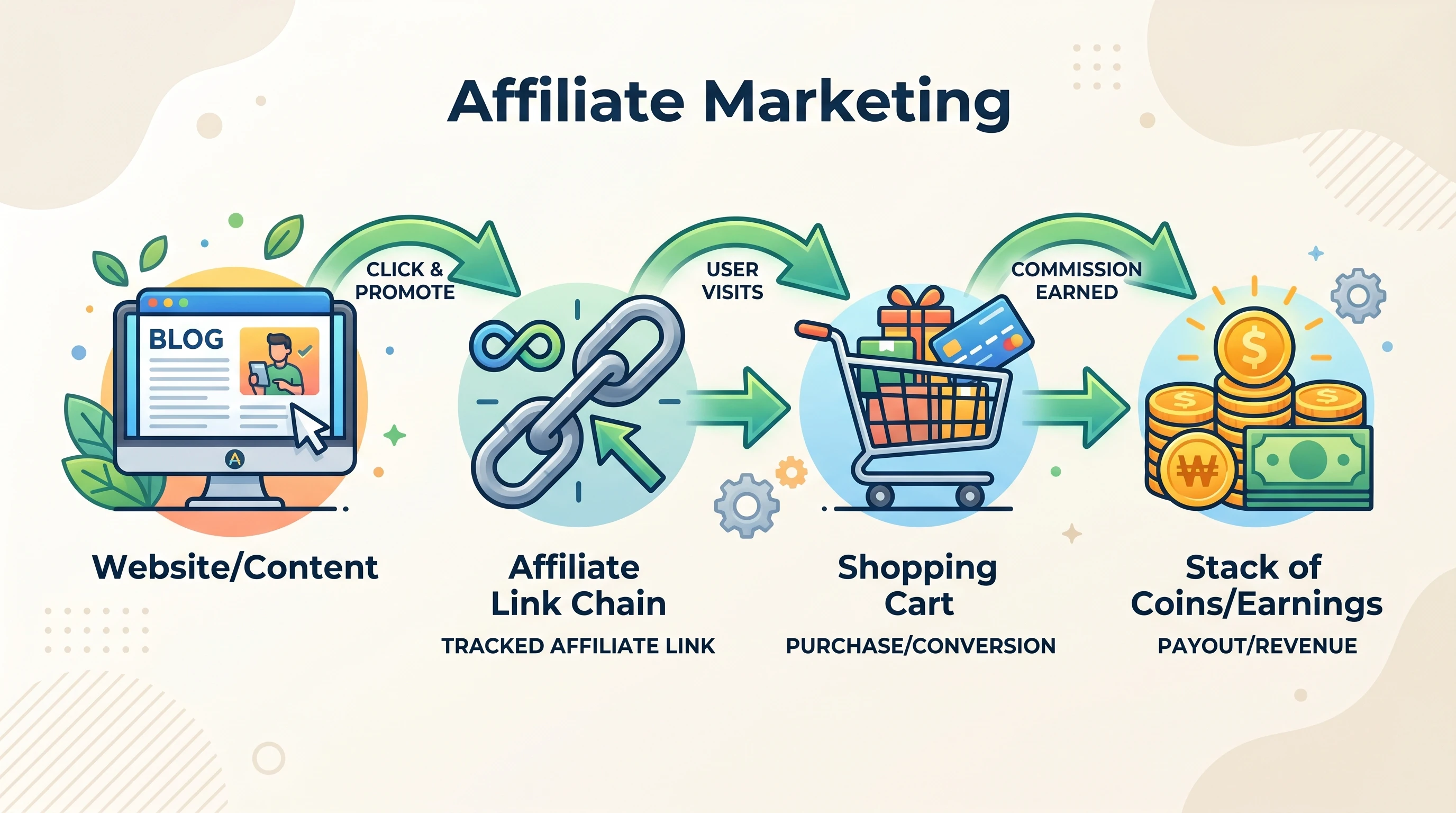
Affiliate marketing works like a partnership between someone who wants to sell a product (the merchant), major companies, someone who recommends or promotes it (the affiliate), which would be you, and someone who actually buys it (the customer). It’s a performance-based model, so you only get paid when someone takes a specific action, usually making a purchase or signing up through your unique affiliate link.
Being an affiliate lets you use your website, social media channel, or email list to introduce products you’re passionate about to your audience. When your followers or readers click that link and buy or sign up, you get a commission. The whole setup is tracked with special links, so you don’t have to micromanage every sale.
How the Affiliate Marketing Process Works
The process might sound complicated, but once you break it down, it’s pretty logical. Here’s how it typically unfolds:
- Join an Affiliate Program: You sign up for an affiliate program or network. Popular options include Amazon Associates, ShareASale, and ClickBank.
- Choose Products to Promote: Most programs give you access to thousands of products. Ideally, you’ll pick items that fit your content and that your audience cares about.
- Get Your Unique Affiliate Link: Each product you promote comes with its own tracking link. This ensures you get credit when someone purchases your recommendation.
- Create Content Featuring the Product: You might write a product review on your blog, post a how-to video on social media, or add a mention in your email newsletter, whatever suits your strengths and audience.
- Drive Traffic and Monitor Results: Sharing your content helps drive people to your affiliate links. Each click, sale, or sign-up. The affiliate program tracks each click, sale, or sign-up. Check your stats in the program’s dashboard.
- Earn Commissions: When someone completes the required action (buying, signing up, etc.), you earn a commission. Payouts are usually made monthly once you hit a minimum threshold.
Key Players in Affiliate Marketing
If you’re more of a visual learner, picture the process as a chain with four key links:
- Merchant (Seller or Creator): The brand or business that owns the product or service. Think of software companies, online retailers, and subscription boxes.
- Affiliate (That’s You): Anyone with a platform or audience, bloggers, YouTubers, social media creators, even everyday folks who like to share recommendations online.
- Affiliate Network: A go-between that connects affiliates with merchants and handles things like payment, tracking, and reporting. Some brands run their program directly, but many outsource it.
- Customer: The end user who buys the product thanks to your recommendation.
Understanding these moving parts helps you find your place in the process and decide how you want to interact with brands and networks.
Types of Affiliate Marketing Models
Affiliate marketing isn’t a one-size-fits-all system. Picking the right approach really depends on your audience and what you’re comfortable promoting. Here are some common models:
- Pay-Per-Sale (PPS): Most popular. Get paid when someone buys a product through your link. Commissions range widely from a few percent up to 50% or more for digital goods.
- Pay-Per-Click (PPC): Earn a small fee each time someone clicks your affiliate link, whether or not they buy anything.
- Pay-Per-Lead (PPL): Paid when someone completes a certain action (like signing up for a newsletter or free trial) via your link.
Some programs offer a mix of these models, so it’s worth reading the details before signing up. Consider which best matches your followers and the products you want to promote. This way, you can make the most of your efforts right out of the gate.
Step-by-Step Guide: Getting Started with Affiliate Marketing
If you’re ready to try affiliate marketing, here’s a simple jump-start method I’ve found works well:
- Pick a Niche You Know or Love: Focusing on a specific topic makes it easier to grow your audience and find the right products to promote.
- Set Up Your Platform: You’ll need a blog, YouTube channel, podcast, or social profile. A simple website is more than enough to get started.
- Find Affiliate Programs: Large retailers like Amazon accept new affiliates, and niche-focused brands often offer even better rates or support.
- Create Helpful Content: Share honest reviews, how-to guides, or product roundups. Value-driven content builds trust and gets more clicks.
- Use Your Affiliate Links: Insert your links naturally. Adding a disclosure that lets folks know these are affiliate links builds trust and keeps things above board.
- Promote Your Content: Share across your email list, social channels, and wherever your audience hangs out online.
- Track and Adjust: Check which links or posts are getting the most traction, and tweak your content or strategy based on what’s working.
Beyond just setting up a platform, focus on delivering content that feels authentic and genuinely helps your audience. People can spot when recommendations are motivated solely by commissions and will be more likely to trust you if you promote things you’ve used or researched extensively. Stay active on your chosen channels and keep testing ideas to see what your followers respond to best.
Common Challenges and How to Deal With Them
Getting into affiliate marketing looks easy at first, but there are a few hurdles you might run into:
- Choosing the Right Niche: Picking a niche you care about makes content creation feel less like a chore. If you go too broad, you risk being a jack of all trades but an expert in none.
- Standing Out from Other Affiliates: With thousands of affiliates promoting similar products, unique content or a personal story behind your recommendations is super useful.
- Building an Audience: This can be slow at first. Consistent posts and genuine interaction help grow your following.
- Understanding Program Rules: Some affiliate programs have strict rules on where and how you can use links. Careful reading up front saves headaches later.
It’s also easy to get discouraged if you don’t see quick results. Remember, affiliate marketing is about building long-term relationships—keep producing helpful content and the impact will grow over time.
Compliance and Trust
Transparency is hugely important in affiliate marketing. Disclosing your affiliate relationships isn’t just about following FTC guidelines. Your readers appreciate honesty, and it helps you build a reputation that keeps people coming back. I just drop a short note: “Some of the links in this post are affiliate links, and I may earn a small commission if you make a purchase at no extra cost to you.” Keeping disclosures clear and visible is the best way to maintain trust.
Advanced Tips and Techniques
Once you’re more comfortable, there’s plenty you can do to give your affiliate income a boost:
Segment Your Audience: Figure out what different groups within your audience are interested in, then tailor affiliate offers to those specific needs. Use surveys or ask for feedback in your content to get insights on what your readers want to see.
Create Comparisons and Tutorials: Side-by-side reviews or step-by-step guides help people make smart decisions and often lead to higher conversion rates. For example, showing a video of how a product works, compared to a competitor, can push more clicks your way.
Test and Optimize: Trying out different placements for your affiliate links or experimenting with calls to action can give your conversion rates a lift. Don’t be afraid to update old posts with current, higher-converting offers. Even a slight tweak in wording or button color can yield big improvements.
Double Down on What Converts: Once you see certain pieces of content performing well, repurpose or promote them more often. Maybe it’s a YouTube “best of” roundup, or an email blast with a high-converting tutorial. Analyze your statistics regularly so you can focus your time where it brings real rewards.
Real-Life Example
Right now, I’m promoting web hosting services. I was already testing different hosts for my side projects. Writing about my experience, both the wins and the headaches, helps other bloggers pick the best fit, and commissions begin adding up over time.
Using my own story and screenshots (while blurring out any personal info) helped the content feel genuine, so people knew I’d actually used the service. Readers write back to say that my honest take made it easier to pick a trusted hosting provider—proof that building trust pays off!
Frequently Asked Questions
Question: Do I need a website to become an affiliate marketer?
Answer: Not always. Social media influencers and email newsletter creators also make affiliate income. Still, a website gives you more flexibility and control. Wealthy Affiliate is the best platform for content creators to purchase a domain, build a website, and grow their business, all while hosting their website.
Question: How do I choose the best affiliate program?
Answer: Look at reputation, support, payment terms, and especially the relevance to your audience. Read the fine print on commission rates and cookie durations.
Question: Can affiliate marketing be a full-time income?
Answer: It’s possible, but it depends on your niche, content quality, and how much time you put in. Most people start part-time and scale up over time.
Final Thoughts
Affiliate marketing offers a practical way to turn your interests into a steady side or even full-time income. By understanding the process, building trust with your audience, and always working to improve your content, you’re positioned to grow both your skills and your earnings. Try focusing on products and services you truly care about, and your recommendations will always feel genuine and relatable. Remember, consistency and sincerity are your best tools—if you stick with it, affiliate marketing can genuinely help you reach your financial and creative goals.

Affiliate marketing is great if you don’t want to hold onto a lot of stock and worry about shipping the products to your customers. The earnings are lower, but once you get the momentum going, you can actually do very well for yourself.
I also like that you can sell many different products, even within the same niche and never have to worry that you are buying a whole lot of stock what won’t sell in the long run. Shipping can also be a pain, especially if you have to worry about customs and overseas shipping costs.
So all in all, I think affiliate marketing is more doable for the average person wanting to earn extra money online.
You bring up a good point about housing inventory and shipping the stock out. Taking away that pressure can make things go smoother in operations. Diversifying your niche products can really ensure doing well for yourself. Thanks for the engagement